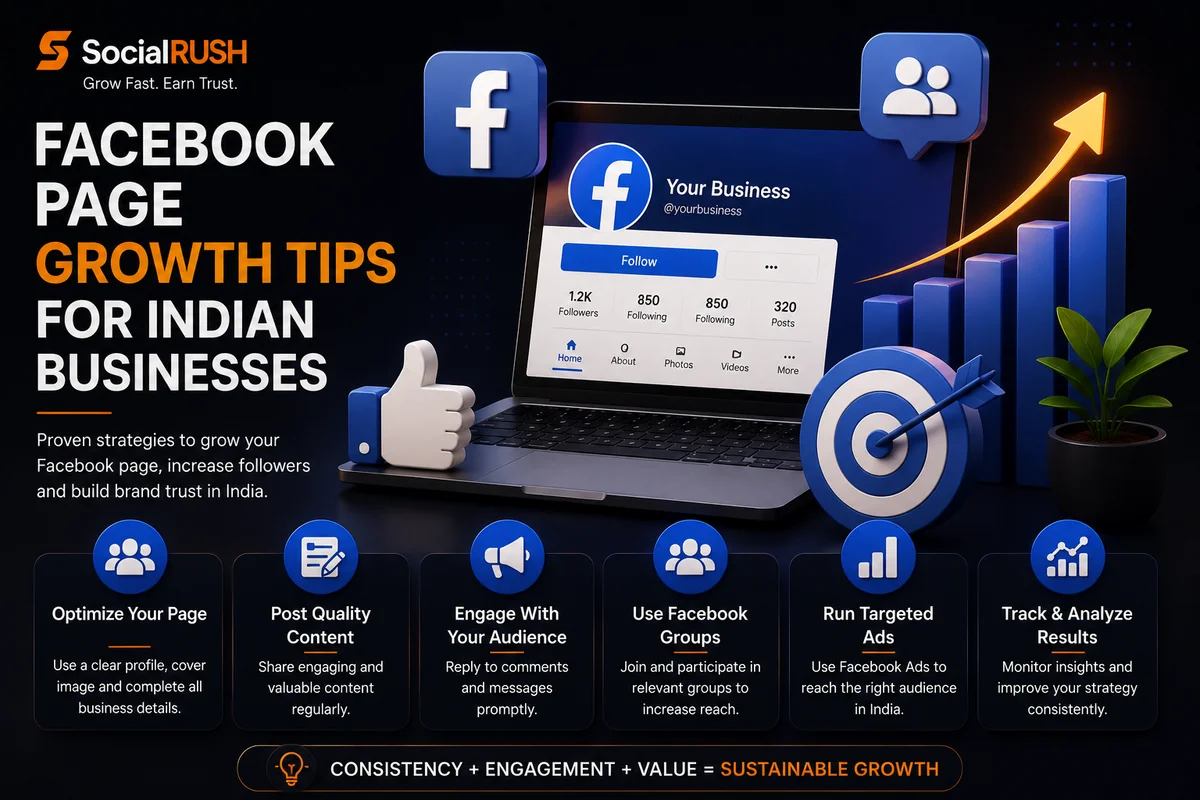
Complete the Page Before Growing It
A Facebook page should answer basic customer questions quickly: what you offer, where you serve, how to contact you, and why people should trust you. Incomplete details reduce the value of any visibility campaign.
For an eligible public page or profile, compare Facebook follower quantities in INR and verify the destination before ordering; followers do not guarantee enquiries or sales.
- 01Set the goal
- 02Choose the format
- 03Review details
- 04Track progress
Practical actions
- Update address, hours, phone, website, and WhatsApp details.
- Pin a useful offer, service guide, or introduction post.
- Use real photos of products, team, location, or work when possible.
Post for Local Trust and Relevance
Local businesses grow when content answers real community needs. Share service explanations, customer education, local updates, behind-the-scenes notes, and practical reminders instead of only promotional posts.
Practical actions
- Use simple language your customers actually use.
- Show process and availability clearly.
- Invite questions through comments and messages.
Use Page Growth Support Responsibly
Follower campaigns can improve visible page presentation, but they work best when the page is ready for visitors. Use only the public page link and keep pricing, delivery, and support expectations clear before ordering.
Practical actions
- Do not share Facebook passwords or admin access.
- Track page follows, messages, and website clicks together.
- Use support if you are unsure which package fits your goal.
A Practical Two-Week Posting Plan for a Local Business
A small business does not need to publish every day to make its Facebook Page helpful. For example, a neighborhood salon could use week one to introduce its core services, show a real workspace photo and answer a common appointment question. In week two, it could explain how to prepare for a visit, share a staff-approved behind-the-scenes moment and clarify booking or cancellation steps. A repair shop could replace those topics with service areas, typical repair questions and safe after-service advice. Choose topics from questions customers actually ask; never invent reviews, before-and-after results or customer stories.
Practical actions
- Week one: publish a useful introduction, a genuine process photo and a frequently asked question.
- Week two: show preparation tips, answer a service question and explain how to book or ask for a quote.
- Use a simple calendar that staff can maintain, rather than copying a competitor's posting frequency.
- Check that photos and customer references are yours to publish or have permission to share.
Make It Easy for Nearby Customers to Contact You
Before promoting a local Facebook Page, view it as a first-time customer using a phone. Can a visitor tell where you operate, what you offer, when you are available and how to ask a question? Check that the Page's contact button, listed number, website, directions and hours are correct for your business. If your services require an estimate, explain what details a customer should include when messaging you rather than promising a universal price. Pin a helpful introductory post with the next step. This makes discovery useful for customers who are ready to enquire, not just people who scroll past.
Practical actions
- Verify the contact button and message flow from a device that is not logged in as the Page administrator.
- Keep the address or service area, opening hours and booking link accurate after changes.
- Describe the information needed for an enquiry, such as preferred service and approximate location.
- Give one clear next step in each post without asking customers to disclose private credentials.
Measure Real Enquiries Alongside Reach and Follows
Likes, reach and new followers can show that a post was noticed, but none of them proves that a local business gained a paying customer. Review available Page insights alongside the enquiries you can actually verify: messages about services, completed contact-form submissions, call requests or confirmed bookings. For example, if an educational post receives reactions but no relevant enquiries, test a clearer service explanation and easier contact route. Avoid attributing every sale to Facebook unless you have reliable tracking. Comparing a few useful indicators over several weeks is more informative than chasing a single follower target.
Practical actions
- Record reach and meaningful replies separately from enquiries, appointments and sales.
- Review whether people who contact the business are within its service area.
- Track sources only when customers consent and the information is reliably available.
- Use campaign support responsibly; visibility or follower numbers never guarantee bookings or revenue.
Facebook readiness checklist for this specific strategy
A useful growth plan starts with evidence, not assumptions. Record where the account stands today and decide what a meaningful improvement would look like for Indian local businesses, service providers, shops, clinics, restaurants, educators, and community brands. Review recent content, profile clarity, audience questions, and the path a new visitor takes after discovering you. The immediate goal is to make the Facebook page more credible, easier to contact, and more useful for local discovery. A simple baseline prevents you from confusing a temporary reach spike with durable progress and gives every organic or assisted campaign a fair way to be evaluated.
Practical actions
- Record the current followers, page visits, messages, website clicks, post reach, reactions, comments, and local enquiry quality.
- Save screenshots or exports so later comparisons use the same date range.
- Choose one primary outcome and two supporting signals for the next 30 days.
- Write down what a qualified audience member looks like before expanding reach.
Discovery plan for Indian local businesses, service providers, shops, clinics, restaurants, educators, and community brands
Discovery becomes more dependable when several small signals reinforce one another. For this strategy, focus on complete page details, local content, customer education, public page follower support, groups, messaging, and useful updates. Each activity should help the right person understand why the account or content deserves attention. Avoid changing every variable at once. Test one topic, hook, format, or distribution habit for long enough to learn from it, then keep what improves qualified reach. This creates a repeatable acquisition system rather than a collection of disconnected tactics that cannot be measured or maintained.
Practical actions
- Turn recurring audience questions into a practical content backlog.
- Repeat winning topics with a new example, format, or level of depth.
- Use platform analytics to separate qualified discovery from empty impressions.
- Document each test and decide in advance what success would mean.
Trust signals that support Facebook decisions
Reach has limited value when visitors cannot understand what to do next. Improve conversion with clear contact details, pinned service post, trustworthy photos, fast replies, simple offers, and public page accessibility. Keep the journey consistent: the promise that earns a click should match the profile, content, and next action people see. Trust also grows through specificity—clear examples, useful explanations, honest limitations, and visible support are stronger than exaggerated claims. Review the experience on a small mobile screen because that is where many Indian customers and viewers first encounter a creator or brand.
Practical actions
- Make the account promise understandable within a few seconds.
- Use proof that is relevant to the audience rather than decorative vanity metrics.
- Choose one call to action per content asset or campaign landing point.
- Check all public links and profile details before starting a growth campaign.
30-day operating rhythm for make the Facebook page more credible, easier to contact, and more useful for local discovery
Consistency works when it is designed around available time. A practical starting rhythm is three practical page updates per week and one local trust post or offer every week. Reserve a short weekly block for research, one for production, and one for measurement. Build reusable checklists for publishing, community replies, and campaign review so quality does not depend on memory. If capacity is limited, reduce the number of formats before reducing usefulness. A smaller schedule that continues for 30 days will reveal more than an ambitious plan abandoned after one busy week.
Practical actions
- Plan content around audience needs, launches, and seasonal moments.
- Batch repetitive work while keeping replies and conversations personal.
- Leave room to respond to timely questions or relevant trends.
- Review performance at the same time each week to create a reliable habit.
Quality and safety signals for Facebook growth
Review progress using followers, page visits, messages, website clicks, post reach, reactions, comments, and local enquiry quality. Compare these signals with business outcomes such as enquiries, repeat viewers, website visits, or community conversations. The main risk is running visibility campaigns before the page answers basic customer questions. If you use a growth service, confirm the current price, delivery estimate, refill eligibility, and required public link before paying. Never share a password or recovery code. SocialRUSH provides order tracking and support, but campaign results still work best when the destination offers useful content and a credible reason for people to stay.
Practical actions
- Compare equal time periods and note any promotion or publishing changes.
- Treat follower or view totals as context, not the only definition of success.
- Pause and investigate unusual changes instead of immediately scaling them.
- Use the dashboard and support records to keep paid activity accountable.