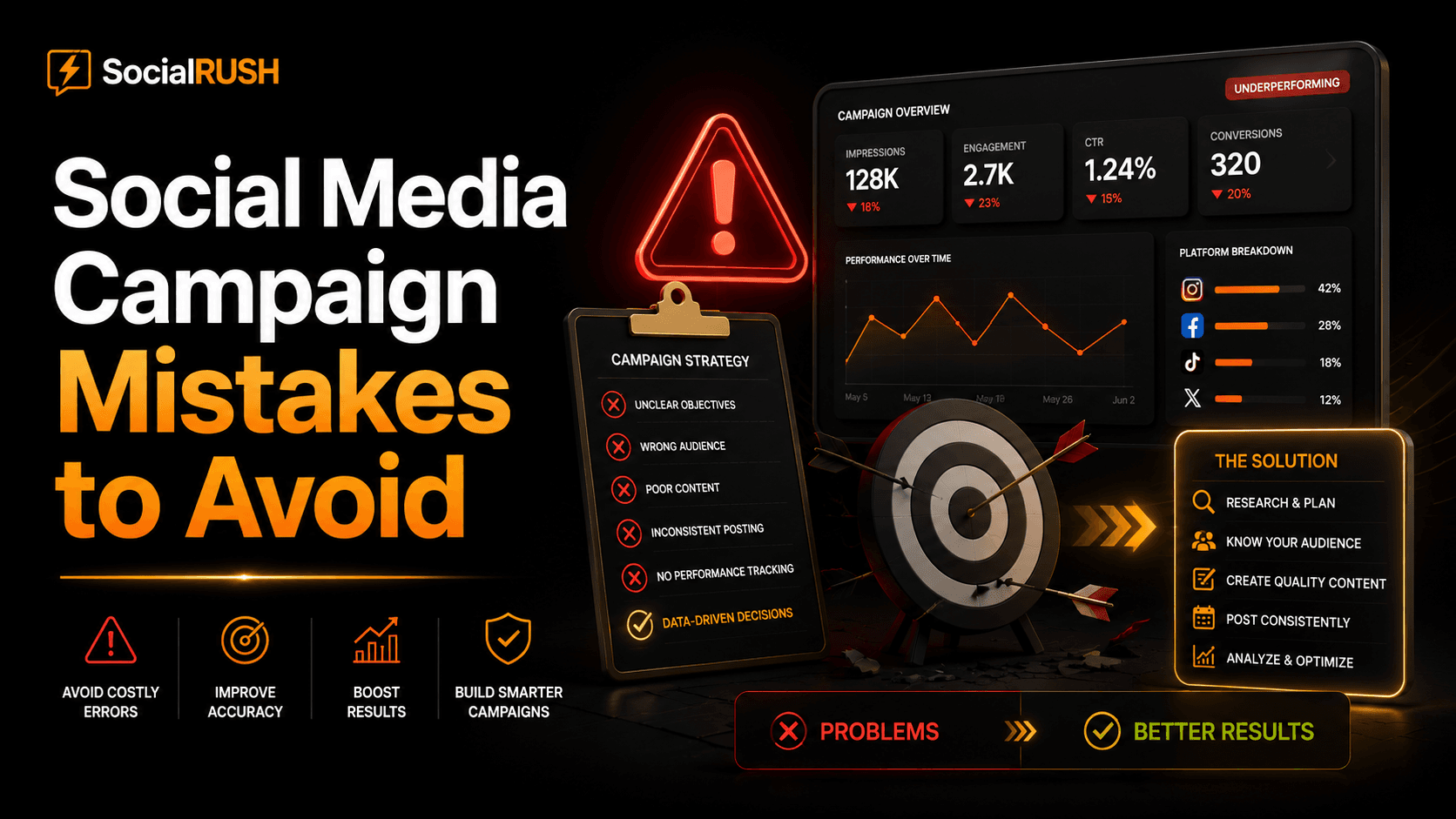
Mistake 1: Launching Without Clear Audience Segments
Generic targeting creates generic results. Segment by creator type, business stage, or audience intent so your message feels relevant.
- 01Set the goal
- 02Choose the format
- 03Review details
- 04Track progress
Practical actions
- Define one primary segment per campaign.
- Use segment-specific hooks in copy and creatives.
- Track performance by segment, not only total spend.
Mistake 2: Ignoring Landing Experience
Campaign traffic drops quickly when landing pages or profiles do not match expectations. Message alignment from ad to destination is critical.
Practical actions
- Keep visuals and promises consistent across touchpoints.
- Reduce friction in first-click actions.
- Review mobile readability before launch.
Mistake 3: No Weekly Optimization Routine
Campaigns need iteration. Teams that review data weekly identify waste faster and shift spend toward higher-converting content.
Practical actions
- Check conversion, retention, and engagement every week.
- Pause low-performing variants quickly.
- Double down on creatives with proven traction.
Discovery plan for creators, brands, and agencies planning assisted growth campaigns
Discovery becomes more dependable when several small signals reinforce one another. For this strategy, focus on clear objectives, verified public links, realistic timing, accurate service selection, and documented expectations. Each activity should help the right person understand why the account or content deserves attention. Avoid changing every variable at once. Test one topic, hook, format, or distribution habit for long enough to learn from it, then keep what improves qualified reach. This creates a repeatable acquisition system rather than a collection of disconnected tactics that cannot be measured or maintained.
Practical actions
- Turn recurring audience questions into a practical content backlog.
- Repeat winning topics with a new example, format, or level of depth.
- Use platform analytics to separate qualified discovery from empty impressions.
- Document each test and decide in advance what success would mean.
30-day operating rhythm for avoid preventable ordering errors and create a safer, more measurable campaign
Consistency works when it is designed around available time. A practical starting rhythm is checking setup before confirmation, monitoring without constant changes, and reviewing results after delivery. Reserve a short weekly block for research, one for production, and one for measurement. Build reusable checklists for publishing, community replies, and campaign review so quality does not depend on memory. If capacity is limited, reduce the number of formats before reducing usefulness. A smaller schedule that continues for 30 days will reveal more than an ambitious plan abandoned after one busy week.
Practical actions
- Plan content around audience needs, launches, and seasonal moments.
- Batch repetitive work while keeping replies and conversations personal.
- Leave room to respond to timely questions or relevant trends.
- Review performance at the same time each week to create a reliable habit.
social media readiness checklist for this specific strategy
A useful growth plan starts with evidence, not assumptions. Record where the account stands today and decide what a meaningful improvement would look like for creators, brands, and agencies planning assisted growth campaigns. Review recent content, profile clarity, audience questions, and the path a new visitor takes after discovering you. The immediate goal is to avoid preventable ordering errors and create a safer, more measurable campaign. A simple baseline prevents you from confusing a temporary reach spike with durable progress and gives every organic or assisted campaign a fair way to be evaluated.
Practical actions